By Jay Gibson, Owner, Morson Painting & Renovations · November 17, 2026 · Katy, TX
If you're picking exterior paint colors in an HOA neighborhood around Katy, you've probably already met the palette book. It's a binder, a PDF, or a page on the management company's site, and it's full of tans, grays and off whites that all blur together on a screen. Homeowners in Cinco Ranch and Seven Meadows tell me the same thing at the first walk around: they don't want trouble with the association, but they don't want their house to look like every other house on the street either. Both of those goals can happen at once. You just have to work in the right order, and that order starts with the parts of your house that aren't changing.
Start with what's already on the house
Your roof, your brick or stone, and your concrete aren't getting painted, so they're the boss of this decision. A warm brown roof shingle will fight a cool blue gray body color every day of the week. Orange toned brick that's common on older Katy builds will swallow a pale cream and make it look yellow. Walk out to the street with your palette chips and hold them against the brick in full sun. You'll cut the book in half in about ten minutes, because half those colors were never going to sit right next to what you've already got.
Pay close attention to undertones. Hold a gray chip against your brick and ask whether the gray leans green, blue or purple once it's outside. Indoors under store lights, that lean is hard to see. Out on your driveway at noon, it's plain as day. Most color regrets I hear about aren't about the color itself. They're about an undertone the homeowner didn't catch until the whole south wall was wearing it.
Texas light will change your color
A color chip is a promise made under somebody else's light. Our light here is strong, and it washes colors out. A soft sage that looks rich on a card can read almost white on a west facing wall in August. A charcoal trim can go nearly black by evening if your street sits under heavy oak shade. That's why I tell every homeowner the same thing: don't pick from the card, pick from the house.
Brush real samples on the building. Put one patch on the sunny side and one on the shaded side, bigger than you think you need, and live with them for two or three days. Check them in the morning before work, at lunch if you're home, and in the evening when the light goes warm. If you still like both patches at all three times, you've got your color. If one patch turns on you, you've saved yourself a full repaint argument for the price of a sample pot. Our exterior painting page walks through how a job runs once the colors are settled, so you can see where the sample step fits.
Split the job into body, trim and door
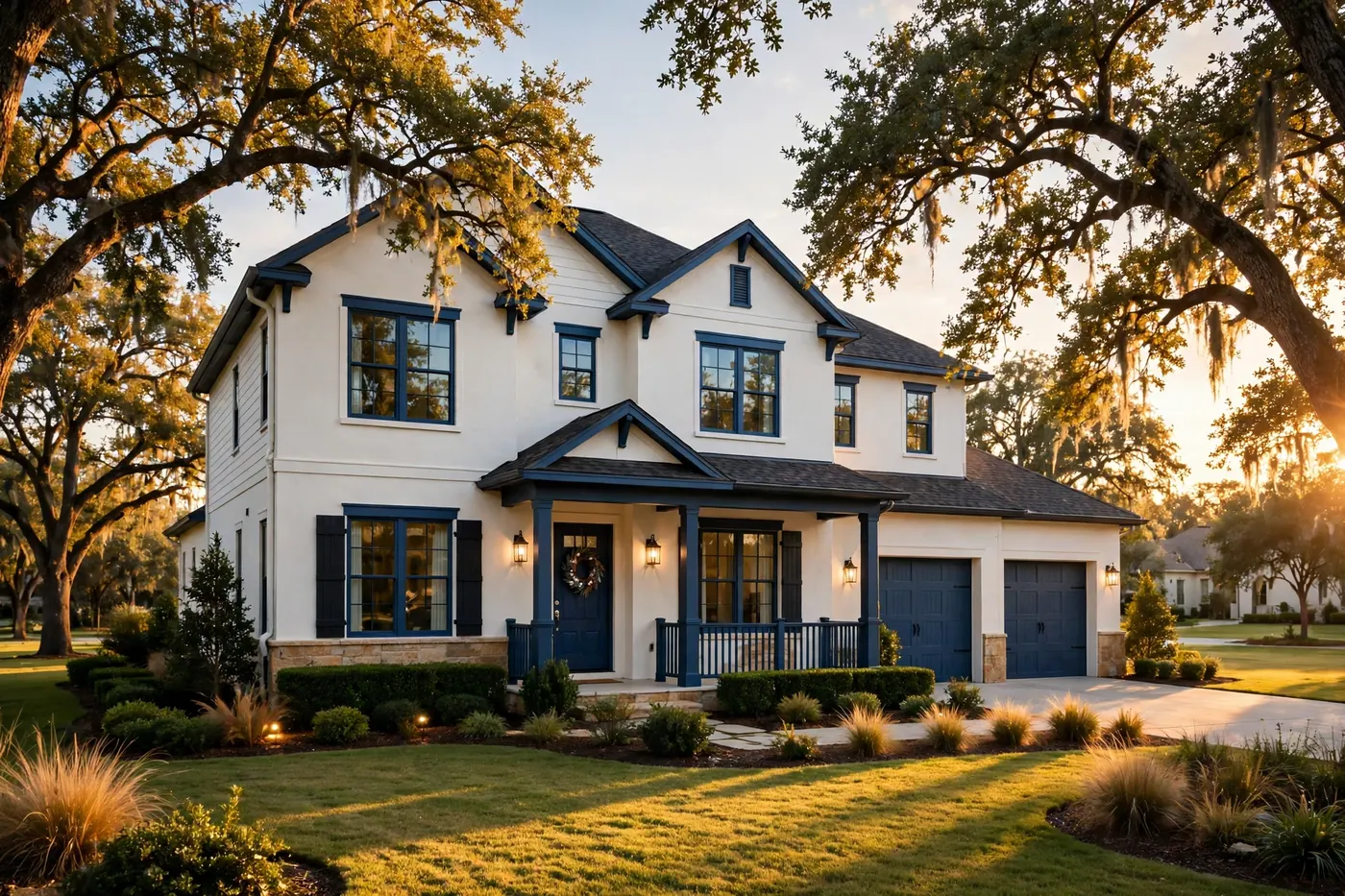
Most HOA palettes are built around combinations, and that's a gift if you use it right. The body color does the heavy lifting and it's the one the association cares about most. Trim is where you add contrast. A body color that feels a little flat on its own often comes alive once a clean, bright trim cuts around the windows and eaves. Shutters and garage doors usually follow the trim or the body, depending on your community's rules, so check that line in the palette before you fall for a pairing.
The front door is where you're allowed some personality. Plenty of palettes treat the door as an accent and give you a wider set of choices there, sometimes including deeper blues, greens and reds that would never pass as a body color. If you've been eyeing a bold color, the door is usually the legal way to get it. A door is also a small, fast job to change later, so it's the safest place on the house to take a swing.
File the paperwork before you book the paint
Here's the part that trips up good people. In most of our master planned communities, you need written approval before the work starts, even if you're repainting close to the existing color. The form usually asks for the paint maker, the color name and code for body, trim and door, and sometimes a photo or a chip taped to the page. Turn in codes, not descriptions. "Light gray" means nothing to a reviewer. A maker name plus a code is something they can check against the book in thirty seconds.
Give the approval some lead time in your plan. Committees don't all meet every week, and a missing code can bounce a form back and cost you another cycle. If you're working against a closing date, a family visit or a listing photo shoot, start the form before you start getting quotes. And keep your approval letter. If a neighbor complaint ever lands, that letter ends the conversation fast. We're insured, we give free estimates, and we'll gladly fill in the color codes on your form from the actual products we're quoting, so the paperwork matches what's going on the wall.
Mistakes I see on Cinco Ranch and Seven Meadows streets
Copying the house across the street sounds safe, and sometimes it is, but their brick isn't your brick and their roof isn't your roof. The same body color can read warm on their house and cold on yours. Another common one is picking a trendy gray without checking it against orange toned brick. Gray over warm brick is the pairing that generates the most unhappy phone calls in this trade, and it's avoidable with one sample patch.
Watch the garage door too. On a lot of Katy homes the garage door is the biggest single surface facing the street. If you paint it the trim color, it can glow like a billboard at midday. A shade closer to the body color usually settles it down. And don't forget the back of the house. The association may not see it, but you will, every morning with your coffee, so sample back there as well if the light's different.
Questions we hear in Katy
Do I need approval if I'm repainting the same color? Often, yes. Many associations still want a form on file for a same color repaint, and the rules vary street to street. A quick call to the management company before you schedule is cheaper than sorting it out after the ladders are up.
What if the color I want isn't in the book? Some palettes allow a variance request, but it's slower and it's not guaranteed. The practical move is to take the closest approved color for the body and get the feel you wanted from the trim and the door, where you've got more room.
How many colors should a house have? For most homes around here, three is plenty: body, trim and door. A fourth can work for shutters if your palette spells it out. More than that and the house starts to look chopped up from the street.
If you've got a palette book on your counter and a house that's due, call 281-505-7525 and we'll walk it with you. I'll bring the sample boards, we'll hold them against your brick in your light, and I'll tell you plainly which combinations I'd put on my own house. That's the same way we've earned a 5.0 rating on Google, and it's why your neighbors keep our number. You can also start with a free quote online, and there's more plain spoken advice waiting on the blog.
← More from the Morson blog · Get a free quote · Meet Jay